10 Steps to Digital Shopfloor Management
How to digitalize shop floor management in 10 steps – from the as-is analysis through a pilot project to continuous improvement. A practical guide for SMEs with limited resources.
24.06.2024
·
2 min read
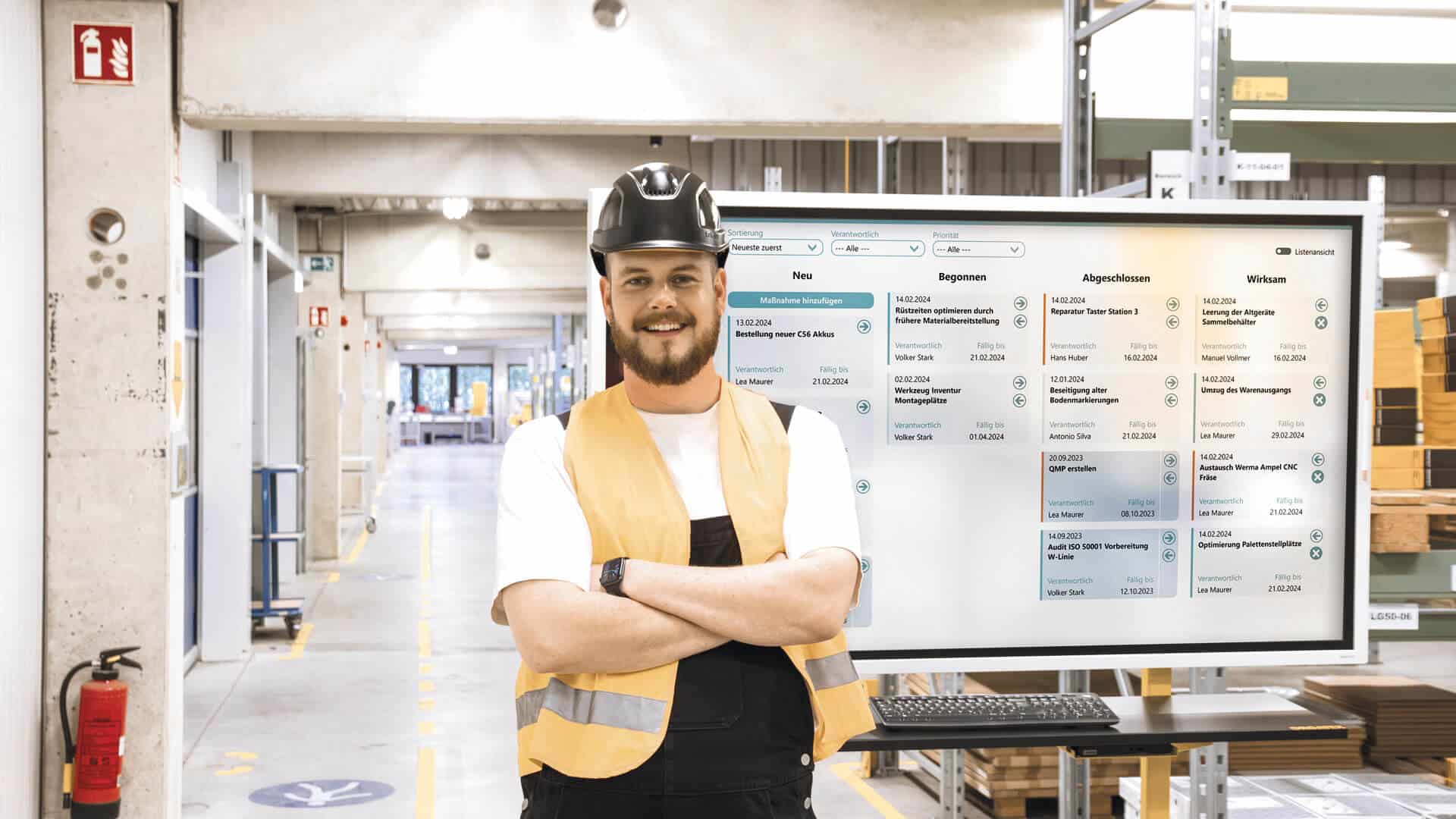
- The digital shop floor is built in 10 steps: from the as-is analysis to continuous improvement.
- Start small with a pilot project on one line instead of changing everything at once.
- Proven methods give structure: SMART goals, Kurt Lewin's 3-phase model, 5 Whys, and the Pareto principle.
- Software like the Apexboard provides the entry point without programming skills – but the method matters more than the tool.
The digital shop floor is built in ten consecutive steps – from the as-is analysis through a pilot project to continuous improvement. This guide is aimed at SMEs with limited resources and shows how to replace analog paperwork step by step with real-time transparency – without a years-long IT project.
The 10 steps at a glance
1. How do you start? As-is analysis & goal definition
Begin with an honest analysis of current processes: which ones cost time, create errors or run entirely on paper? Building on that, define two or three measurable goals using the SMART principle – for example, “reduce downtime by 15% by the end of the quarter”. This creates clarity and priority.
2. What to clarify first? Data protection & IT requirements
Clarify the technical and legal framework early: are there internal rules, statutory regulations or co-determination rights (GDPR, works council)? Aligning with IT, data protection and the works council in advance saves time later and avoids conflict.
3. Which technology fits? Choosing a solution
Look for interfaces to ERP, MES and sensors, for reliable support and for usability. IT resources are often scarce – solutions like the Apexboard enable an entry without programming skills, so your team can build boards itself.
4. How do you get the team on board? Fostering acceptance
Digitalization is teamwork. Involve employees early, communicate goals and benefits transparently and define roles. Kurt Lewin's 3-phase model (unfreeze, change, refreeze) helps turn those affected into co-creators.
5. Where does the data come from? Making data sources usable
A stable data foundation is the prerequisite for transparency. Prioritize the sources for your use case and clarify the access paths – via API, OPC UA, SQL or directly from the ERP. Check the completeness, timeliness and frequency of the data.
6. How do you test? Starting a pilot project
Start in a manageable but representative area and define a clear use case – for example a digital shift log or a KPI visualization. The pilot is not a finished product but a space to learn.
7. What does the data say? Evaluate & optimize
Once data flows, it's about concrete insights. Use structured methods such as the 5 Whys or the Pareto principle (80/20) to find real causes instead of surface symptoms.
8. How does it become routine? Visualize data & use it daily
Data alone changes nothing. Gradually replace whiteboards with digital dashboards in the daily shop floor meeting and define thresholds and escalation levels via an Andon board. A simple traffic-light system shows at a glance where to react immediately.
9. How do you scale? Rollout
After a successful pilot, it's about expansion. Roll out in clusters – by lines or plants – rather than big bang, and build an internal network of key users who enable other teams.
10. How does it stay alive? Continuous improvement
Digitalization is not a one-off project but a learning process. Establish a clear channel for improvement suggestions and make progress visible, for example via an OKR dashboard. This creates a culture of continuous improvement (CIP).
One final note: software provides the entry point, but digital shop floor management is first and foremost a leadership method. More on the big picture in the guide to digital shop floor management.
Frequently asked questions about digital shopfloor management
How do you start with digital shopfloor management?
With an as-is analysis of current processes and clear goals. Only then are suitable technologies chosen – not the other way around.
Why is a pilot project useful?
A limited pilot quickly shows what works, involves employees, and builds acceptance before a broad rollout.
What makes the digitalization sustainable?
Clean data integration, considered security and data-protection measures, plus continuous monitoring and feedback keep the system effective long-term.