DISPLAYS ON SITE
1 Display
EMPLOYEES
18
Data sources


1 License
One license per display

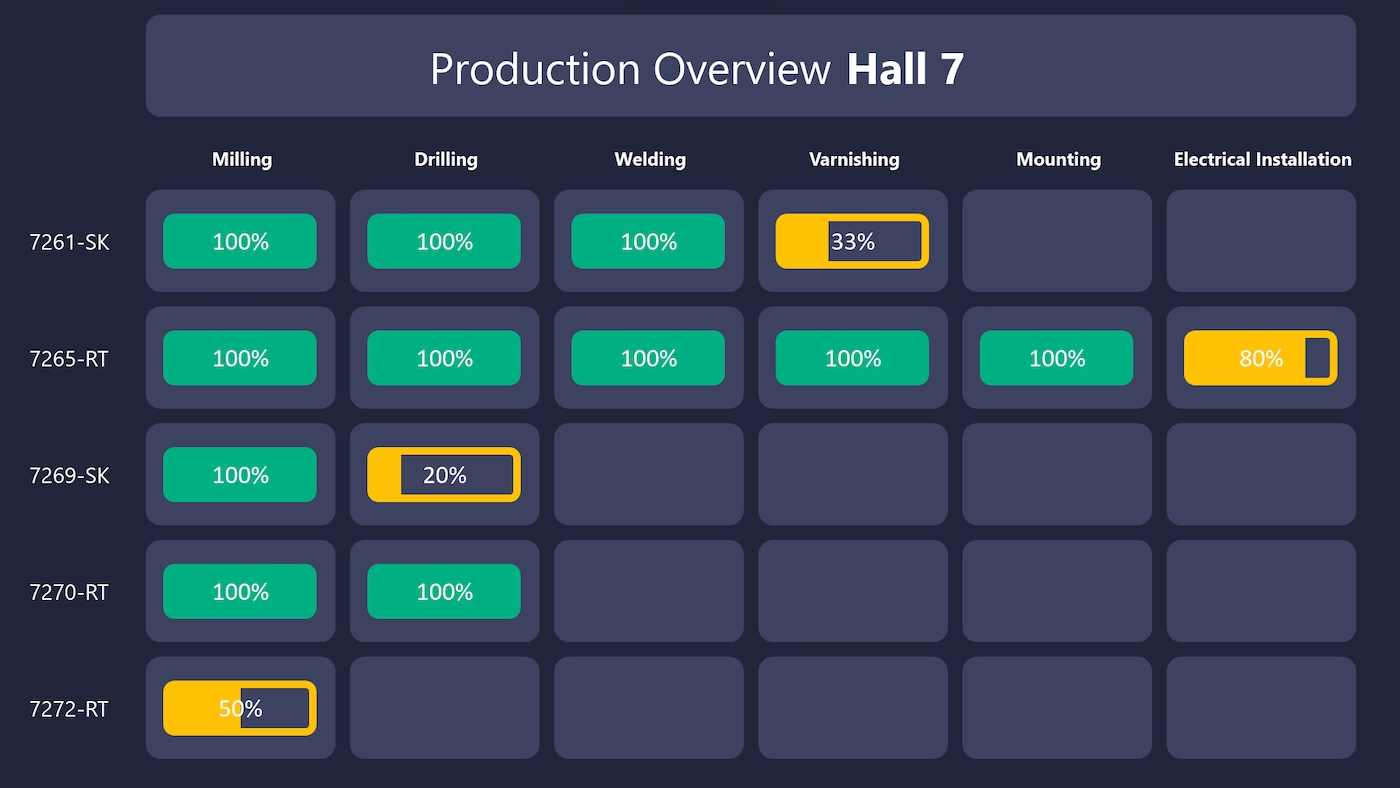
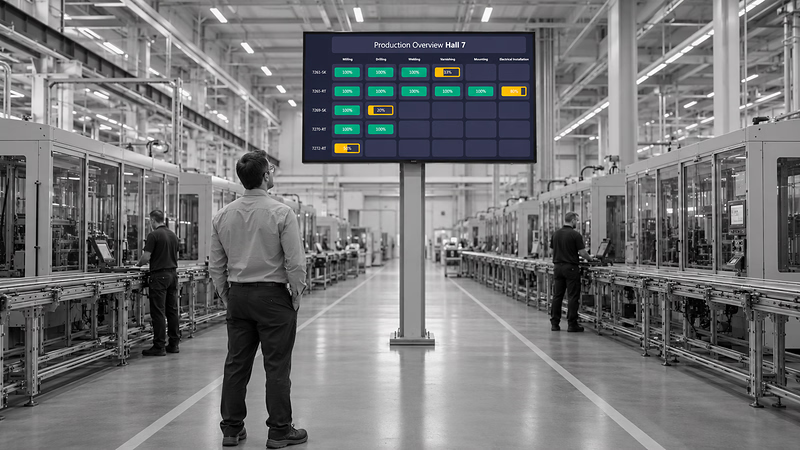
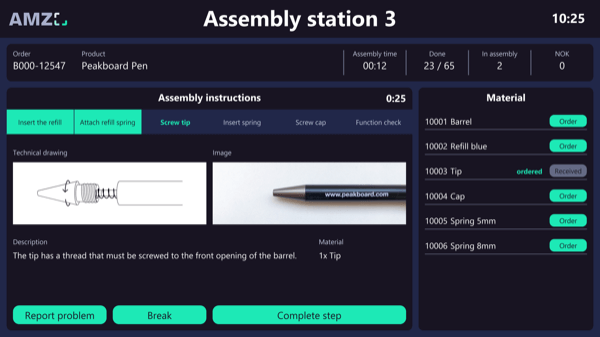
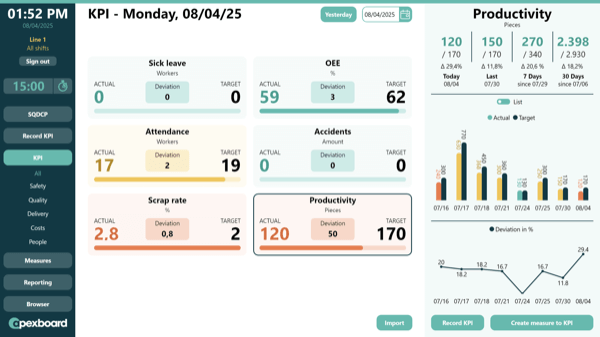
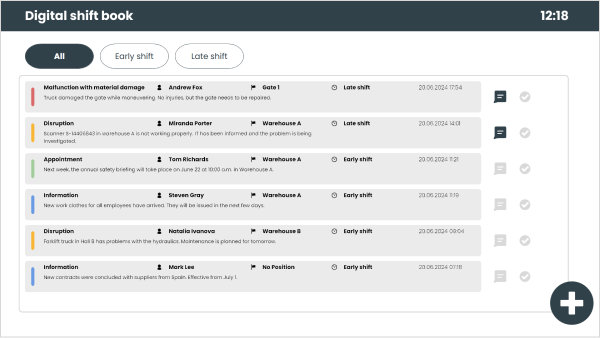
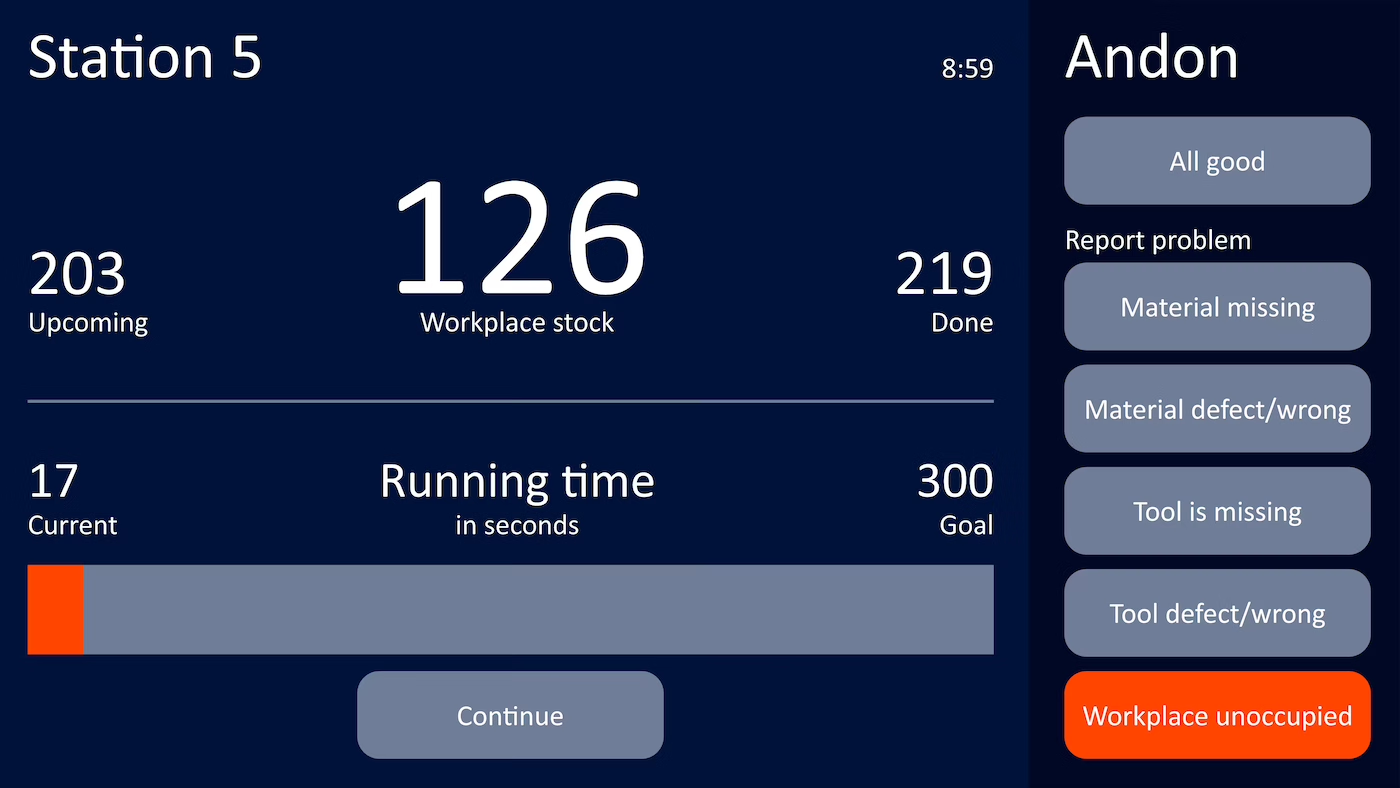
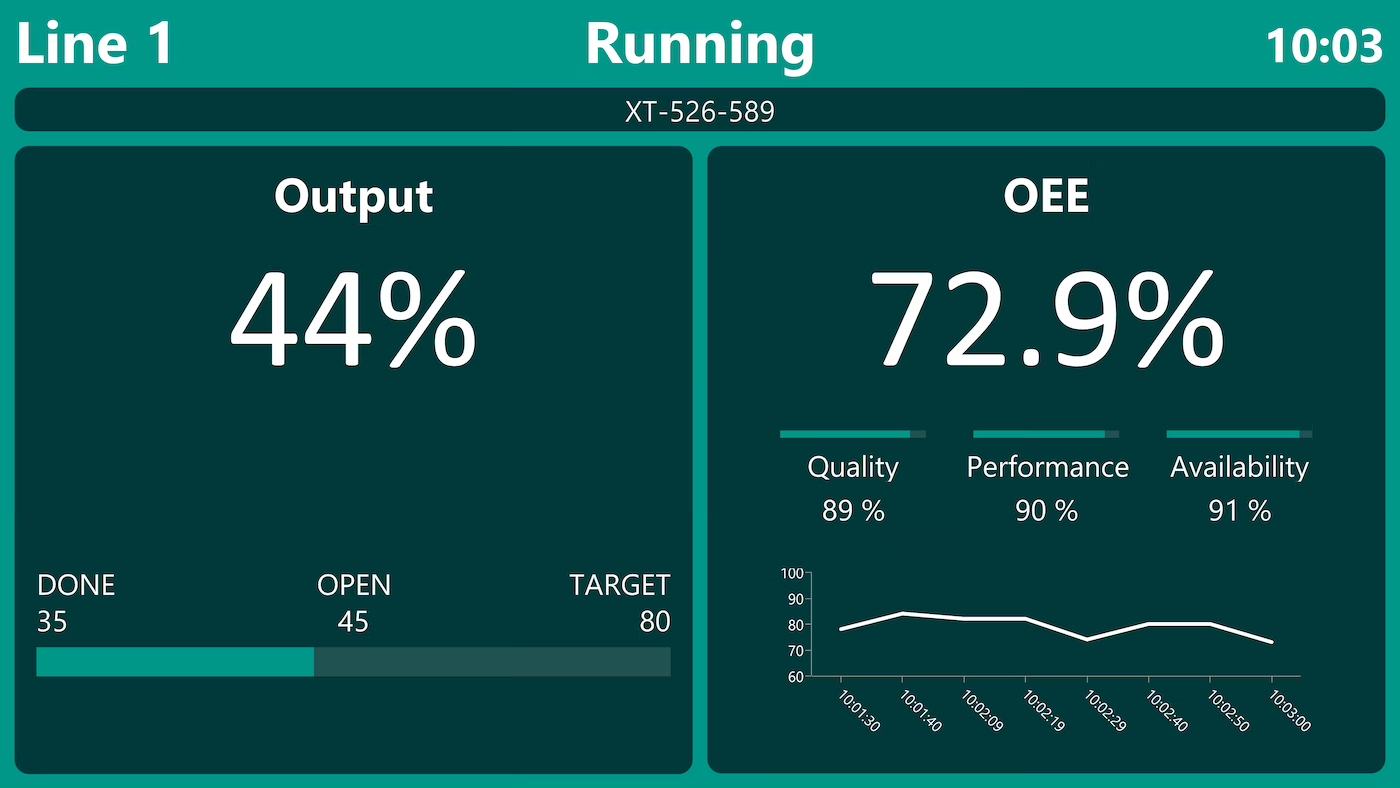
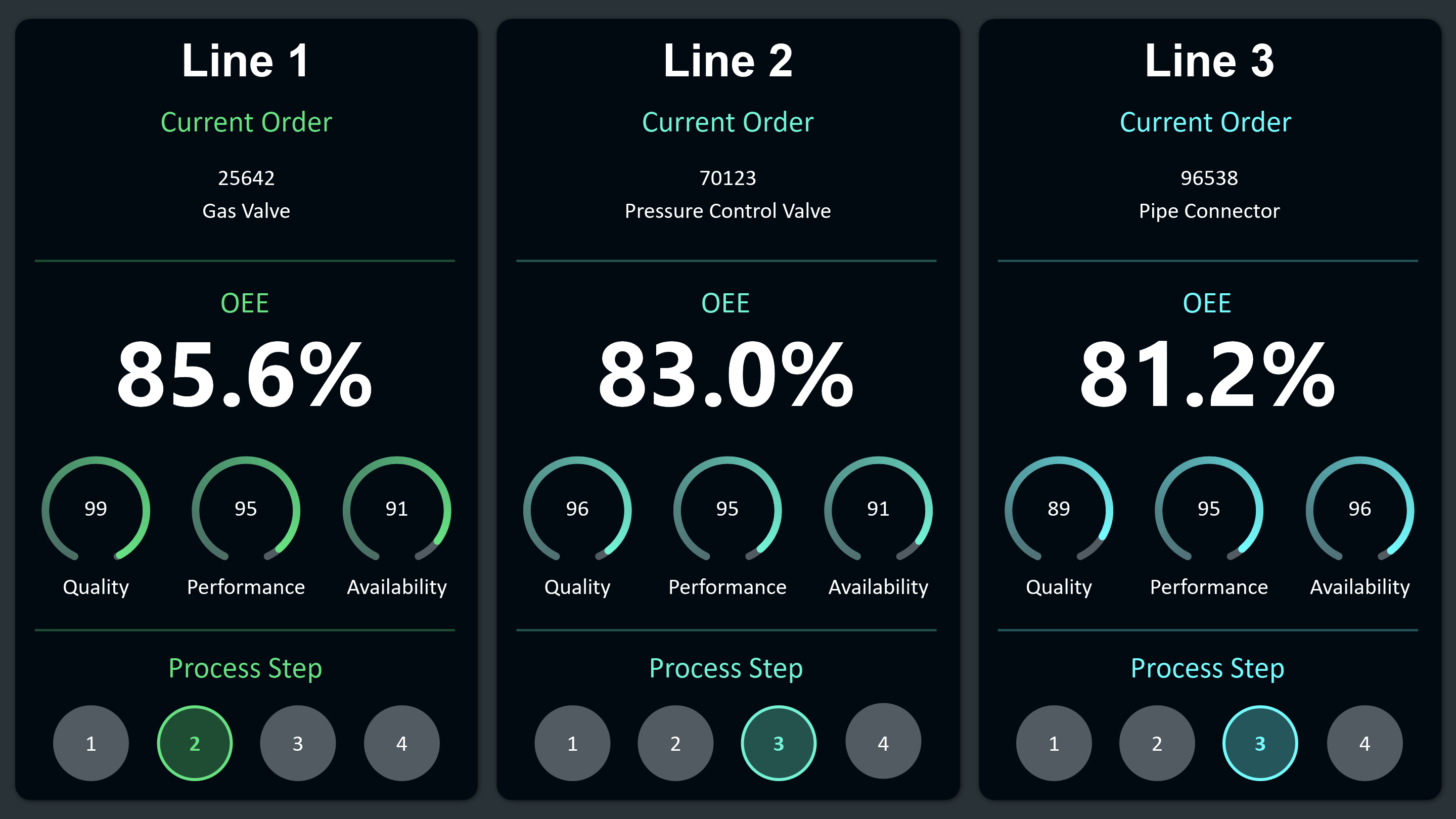
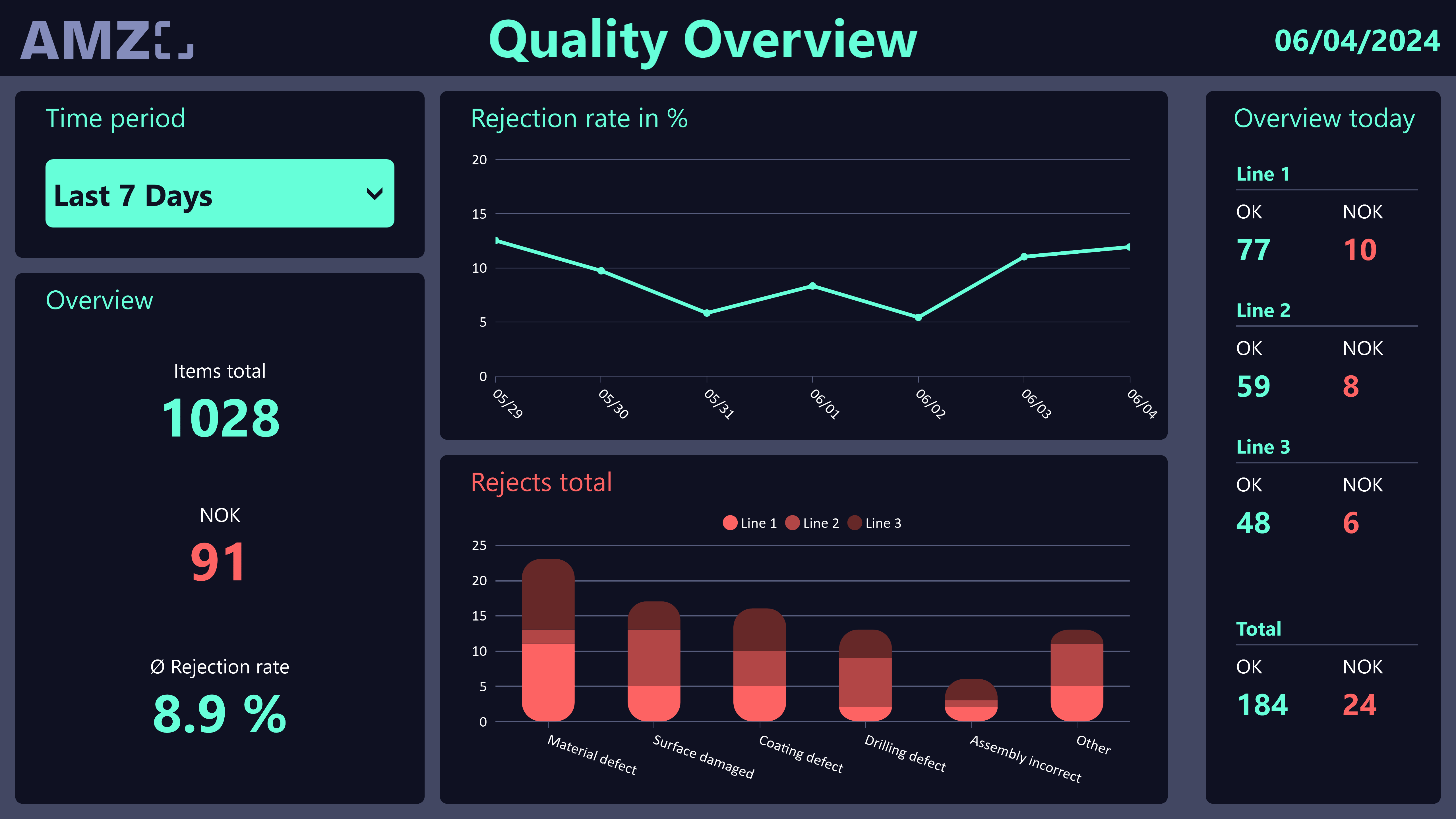
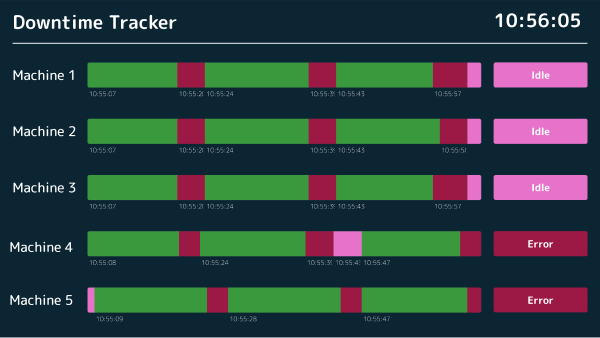
The status display from Peakboard gives an overview of the status of several production lines. It shows the progress of the lines as well as the progress of the individual operations, so production orders can be followed without detours.


Every line has to be checked separately.
How far the individual operations have gotten sits only in the database.
For the overall picture, someone pulls the figures together.
Native SAP connector, OPC UA, MQTT, and dozens of other sources are available out-of-the-box. You just connect, instead of integrating – and the data appears directly at the shop floor.


%201.svg)


%201.svg)


An extra line, a different operation, a new database – thanks to the low-code editor and Peakbot, you can adapt the overview yourself, no coding skills required.
Whether on the Peakboard Box or your own hardware – both run 100% on-prem, with no single point of failure and no cloud dependency.
Device-based pricing instead of user-based licenses: one license per display, unlimited users per device. More staff on the same display cost nothing extra.



Introducing this multi-line overview shouldn't take a year. With Peakboard, you start right away – no appointment, no major IT project.

Start Immediately · No Appointment · Free
If you need support: You'll find tutorials and step-by-step guides on our Helpsite and our YouTube channel. For individual needs, we offer workshops and consulting.
In conversation · With experts · 55 min.
Discuss your specific use case with an expert – briefly provide information about your use case beforehand, and we'll get straight to the point.
You'll get a complete overview of all features and see what's possible with Peakboard in your environment.

Each line shows its overall progress, with the state of the individual operations below. In the example, the data comes from a SQL database; you can just as well connect ODBC, MS SQL Server, MS Access, MS Azure SQL, Oracle Database, IBM DB2, MySQL, PostgreSQL, MongoDB, Teradata, or Wintool – an ERP system works too.
How to capture the states and stoppages of the machines behind those lines is covered on the page about machine monitoring software.
Both the progress of each individual production line and the status of its respective operations – all lines side by side at a glance.
A SQL database by default. Alternatively, you can also connect ODBC, MS SQL Server, MS Access, MS Azure SQL, Oracle Database, IBM DB2, MySQL, PostgreSQL, MongoDB, Teradata, Wintool, or an ERP system.
Especially for job production with several parallel lines and orders, where keeping track of individual operations is critical.
Yes. Peakboard is a low-code platform: you change lines, operations, and layout by drag-and-drop in the Peakboard Designer.
Peakboard runs entirely on-premises on your own network – production data never leaves your company. There's no cloud requirement, no single point of failure, and you keep full control over your infrastructure.